Ways to show appreciation to the people you love (without guessing what they actually want)
A friend of mine spent six weeks planning a surprise weekend for his wife's birthday. He booked the cabin, arranged the sitter, wrote the card. She thanked him warmly, then two days later told him what she really wanted was a Sunday morning where nobody needed anything from her. He'd delivered a gift. She'd asked for silence.
That gap — between what you give and what they receive as love — is where most appreciation efforts die. Not because people are ungrateful, but because we default to our love language instead of theirs. I've made this mistake more times than I'd like to admit, and I've watched it play out in friends' relationships, in families, and once, memorably, in a workplace where a manager handed out gift cards to a team that just wanted him to stop changing deadlines.
So this isn't another list of 52 nice gestures. It's a way of thinking about appreciation that actually lands.
Key Takeaways
- Appreciation fails when it's formulaic — the match between gesture and recipient matters more than the gesture itself.
- Words work, but only when they're specific. "You're amazing" evaporates. "You remembered I hate phone calls and handled my mom" sticks for years.
- Frequency beats intensity: small, regular acknowledgments outperform one grand annual gesture.
- Distance is not an excuse — digital appreciation just needs more texture to compensate for missing tone and touch.
- If your family never said "I love you" growing up, you can still express appreciation. It just takes a different vocabulary.
- Notice out loud. Most people feel unappreciated because nobody names what they quietly carry.
Why generic gestures fail, and what to do instead
Here's the thing nobody tells you: appreciation is not a transaction. It's a recognition. You're not paying someone back for something — you're telling them you saw it happen.
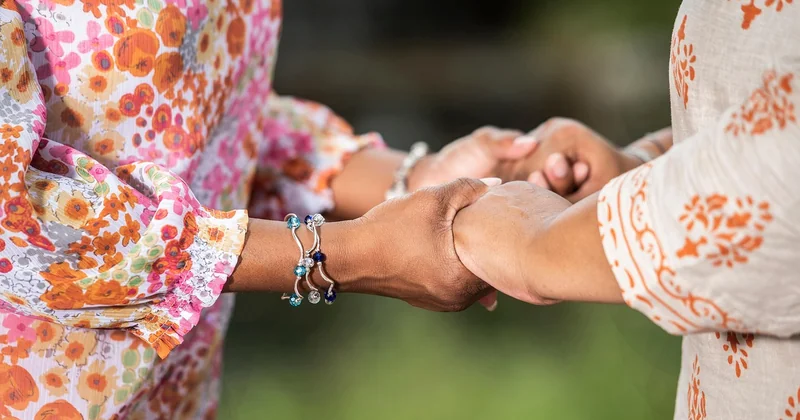
Which is why the same box of chocolates that delights one person feels hollow to another. The gesture isn't the point. The attention behind it is.
How do you figure out what someone actually needs?
You don't guess. You observe, and you ask — ideally not in the middle of an argument.
Watch for the complaints. People tell you what they want in the shape of what's missing. "You never have time for me" is a request for presence, not a calendar meeting. "I do everything around here" is a request for recognition and shared load, not a bouquet.
Then ask directly, in plain language: "What makes you feel most appreciated — words, time, help, or something else?" It sounds clinical. It isn't. I've asked this question of my partner and of two close friends, and every single answer surprised me. One said words. The other two said help with logistics — the boring, invisible kind.
- Words of affirmation: they want to hear it, spelled out.
- Quality time: undistracted presence, no phone.
- Acts of service: you do something that lightens their day.
- Physical affection: touch as reassurance.
- Thoughtful details: small things that prove you were paying attention.
Notice that gifts barely register for most people. That's not a moral judgment on gifts — it's just that a purchased object carries less information than a chosen action.
What are 5 ways to show gratitude?
Five is a good number because it forces you to be concrete rather than sweeping. Here's how I'd frame them, in rough order of how often they're underused:
- Name the specific thing they did. Not "thanks for everything" — "thank you for driving my mother to her appointment on a workday."
- Name what it cost them. Time, energy, a favor they'll have to repay elsewhere. Acknowledging the cost is what separates gratitude from politeness.
- Name the effect on you. "It meant I could actually sleep that night."
- Repay in their currency, not yours. If they value time, give time. If they value being heard, listen without fixing.
- Repeat it later. Bring it up a week or a month afterward. It proves the moment lodged, which is the whole game.
The one I see people skip most often is the second. Cost is invisible by design — that's what makes it worth naming.
What are good ways to show appreciation?
Good appreciation has three properties: it's specific, it's timely, and it's proportionate. Miss any of the three and it reads as either noise or pressure.
How often should you express it?
More often than feels natural, and less elaborately than you'd think. There's no correct number, but the pattern that works is asymmetry: frequent small acknowledgments, occasional larger ones. If every expression is a big production, the other person starts bracing for what it means. If it's constant and tiny — a text, a note on the counter, "that was a good call" — it becomes background warmth.
What kills appreciation is uniformity. Same words, same tone, same timing. It stops registering.
| Approach | Works when | Backfires when |
|---|---|---|
| Verbal acknowledgment | They value being seen and heard | It's vague or repeated word-for-word |
| Doing a task for them | They're overloaded | It removes something they wanted to control |
| Undivided time | They feel peripheral in your life | You're distracted the whole time |
| Written note or message | They reread things, or you're apart | They need presence, not text |
| Public recognition | They're comfortable being seen | They're private and it embarrasses them |
What are some positive words to express appreciation?
Words matter, but not the ones most lists suggest. "Grateful" and "thankful" are fine. They're also generic. What actually lands is language that could only apply to this one person.
Try these patterns instead of standalone adjectives:
- "I noticed you [specific action], and it changed how my day went."
- "You're the person I call when [situation] — because you [reason]."
- "I don't think I've said this out loud, but [their contribution] matters more than you realize."
- "The way you handle [thing they're good at] makes me feel steadier."
- "You didn't have to do that. I'm glad you did."
The phrase "you didn't have to" is quietly powerful, because it names the voluntary nature of what they gave. Gratitude for something compulsory is just manners.
How to show appreciation in your relationship?
This is where the stakes are highest and the habits are laziest. Long-term partners become infrastructure — always there, rarely noticed. That invisibility is the problem, not any shortage of feeling.
The routine becomes the risk
What works, in my experience, is making recognition part of the ordinary rhythm rather than a special event. A two-line text in the middle of the day about something unrelated to logistics. Saying out loud when you notice they handled something you'd been dreading. Not waiting for an anniversary to say the thing.
And the harder one: ask what they'd want more of. Then actually watch, over weeks, whether your behavior changed. A promise made once and forgotten is worse than never promising.
Showing appreciation across distance, and across different families
Two situations get left out of nearly every list on this subject.
The first is distance. When you can't be in the same room, appreciation needs more texture, because tone and touch are gone. Voice notes carry more than text. A photo of something that reminded you of them does more than a heart emoji. If you're far apart, a short call where you actually listen beats a long message where you perform.
The second is family culture. Some families say "I love you" daily. Mine didn't, and it took me years to notice that appreciation still happened — through showing up, through food, through someone quietly fixing a thing that had been broken. If words feel foreign in your family, you don't have to force them. You can name the action instead: "I saw you take care of that. Thank you."
Across cultures the balance shifts too, between what's said and what's done, between public warmth and private loyalty. The safest approach is the same everywhere: watch what the person responds to, and give more of that.
What ties all of it together is simple, and a little uncomfortable. Most people in your life are quietly carrying things you've never acknowledged. The appreciation they're waiting for isn't a bigger gesture. It's you finally naming what you already see — and doing it today, while it still sounds like observation rather than a eulogy.