Someone asked me last month why they always feel bloated after lunch. I asked what they ate. "A salad," they said. From a supermarket. With a sweet dressing and a bag of crisps on the side. That salad had more sugar in it than a chocolate bar.
This is the trap most people fall into with healthy eating. They think it's about willpower, about choosing the "good" option over the "bad" one. It isn't. It's about the habits you build around food — the small, repeatable decisions that don't require a spreadsheet or a nutrition degree. And the good news is you can start most of them today, without throwing out your entire kitchen or signing up for a meal-plan subscription.
I've been cooking for myself for years, and I still get it wrong sometimes. The difference is I've stopped aiming for perfect. Here are the simple healthy eating habits that actually stick.
Key Takeaways
- Focus on building 2-3 habits at a time, not overhauling everything at once.
- Most of what's sold as "healthy" — salads, granola, flavoured yoghurt — is loaded with added sugar.
- Protein and fibre at breakfast keep you full until lunch; a sugary cereal won't.
- The 3-3-3 rule isn't a real nutrition framework — treat any version of it with caution.
- Your best first move is a glass of water and something with protein, within an hour of waking.
Start with what you already eat
Before you change anything, spend one week writing down what you actually eat. Not what you think you eat — what you eat. Most people are honestly surprised by the result. I was. I thought I ate vegetables four or five times a week. A quick note in my phone showed it was more like twice, and one of those was a garnish of parsley I didn't even want.
Keep it simple: a note in your phone, no calorie counting, no weighing. Just the food and roughly when you ate it.
Why this matters more than a diet plan
You can't fix a habit you can't see. The point isn't guilt or judgement. It's data. Once you know what your default meals actually are, you can spot the small adjustments that make a difference — and ignore the ones that don't. I'll admit, seeing my week laid out on screen was a little uncomfortable. But it was more useful than any meal plan I'd ever downloaded.
The pattern most people miss
The thing that shows up again and again in that first week? Snacking not because you're hungry, but because you're bored, tired, or stressed. That's not a food problem. It's a trigger problem. More on that later.
What are some healthy eating habits for beginners?
Beginners don't need a complex system. They need a handful of moves that are hard to get wrong. Here's where I'd start.
Put protein on your plate first
Protein is the most filling of the three macronutrients, and it's the one most people under-eat at breakfast. A plate built around a protein source — eggs, yoghurt, beans, fish, chicken, tofu — keeps you steady for hours. Build the rest of the meal around it, not the other way round.
Drink a glass of water before you eat
Not a magic trick, just a cheap one. Thirst and hunger feel surprisingly similar, and a glass of water 20 minutes before a meal often takes the edge off. Nothing dramatic. But over a month it makes a difference.
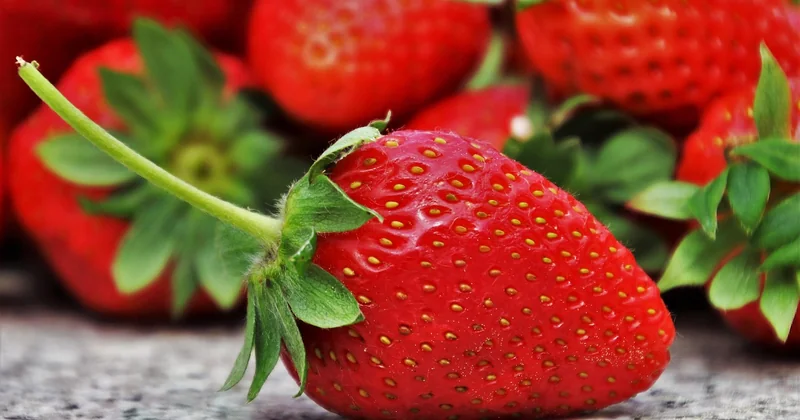
Keep fruit where you can see it
We eat what's visible. Put a bowl of apples or oranges on the counter and move the biscuits to a cupboard you don't open often. That single change — visible fruit, hidden biscuits — cuts my own snacking more than any rule I could write down.
Stop drinking your sugar
Soft drinks, flavoured coffees, fruit juices, and most "sports" drinks are the easiest place to cut a big chunk of sugar without losing any real food. Swap one for water or sparkling water with a slice of lemon. If you do this once a day, that's the single easiest habit on this list.
What are 10 healthy eating habits?
Ten is more than most people need, but here's a real list — not the padded version you'll find on most sites. The first three matter more than the rest.
- Eat a source of protein at every meal.
- Fill half your plate with vegetables or fruit, whatever the meal.
- Drink water as your default drink.
- Eat slowly enough that you notice when you're full — 20 minutes, roughly.
- Cook one meal a week from scratch, even if it's basic.
- Keep snacks you don't want to eat out of the house.
- Eat breakfast, and make it savoury or protein-based more often than sweet.
- Choose whole grains over refined ones when it's easy — brown rice, oats, wholemeal bread.
- Plan two or three dinners ahead so you're not deciding at 7pm when you're tired.
- Don't drink your calories.
That's ten. If you only do three, do numbers one, two, and three. They carry most of the weight.
What is the 3-3-3 rule for healthy eating?
You've probably seen this floating around: eat every 3 hours, eat 3 meals and 3 snacks a day, or something similar. Here's the honest answer — the 3-3-3 rule isn't a real, standardised nutrition guideline. It's a catchy format, and you'll find a different version of it depending on who's pitching it.
Some versions say 3 meals, 3 snacks, 3 hours apart. Others say 3 colours on your plate, 3 portions of vegetables, 3 litres of water. None of these are backed by a consistent framework. That doesn't mean a version of it can't work for you — plenty of people do fine eating every 3 hours, and plenty do fine eating three meals with no snacks. It just isn't a rule. It's a rhythm, and you should pick the one that fits your day rather than forcing your day to fit a slogan.
My advice: ignore the number and check the substance. Does your version include protein? Vegetables? Water? If yes, it's probably fine. If it's just counting, it's probably not.
What is the healthiest thing to start your day with?
Water first. Then food with protein.
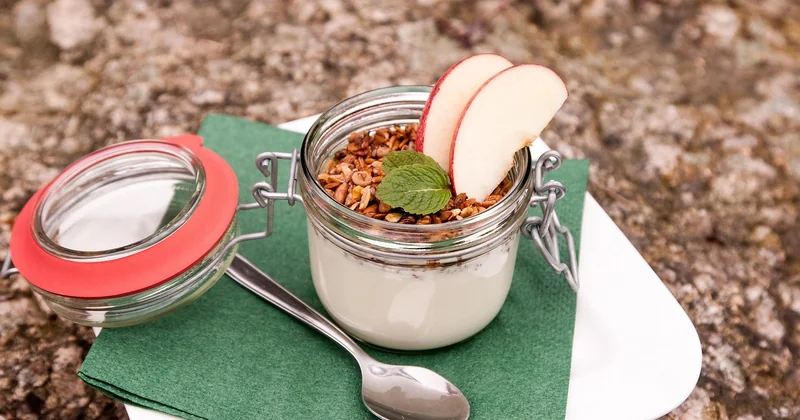
Not because breakfast is magic, but because most people's breakfasts are sugar. Cereal, croissants, sweetened yoghurt, flavoured oat drinks, fruit juice — that's a breakfast that crashes you by 10am, and then you're hungry again before lunch and snacking on whatever's nearby. It's a loop. I lived in that loop for years and blamed myself for having no willpower. I didn't have a willpower problem. I had a breakfast problem.
What to actually eat
- Eggs — boiled, fried, scrambled, whatever you'll actually make
- Plain Greek-style yoghurt with nuts and a bit of fruit
- Oats with milk, a spoon of peanut butter, and no added sugar
- Wholegrain toast with avocado, or with cheese and tomato
- Leftovers from last night's dinner — genuinely, this is the most underrated breakfast
Notice none of these are "breakfast foods" in the branded sense. The best breakfast is often just a normal meal eaten at a reasonable hour. If you can't face food in the morning, at least drink water. You'll get there.
The habit that beats every rule
Most healthy-eating advice fails for the same reason most gym memberships fail: it asks for a big change on day one. And big changes don't last. What lasts are tiny changes you barely notice making.
Pick two. Not ten. Two habits, for two weeks. When they stop feeling like effort, add a third. This is the only approach I've seen work reliably — for me and for everyone I've watched try it. I once tried to overhaul everything on a Monday morning. By Wednesday I was eating toast over the sink and pretending the whole thing never happened.
A quick comparison
| Approach | What it looks like | How long it lasts |
|---|---|---|
| Full overhaul | New diet, new shopping list, new routine, all at once | 3-10 days, then collapse |
| Single-habit swap | Water instead of a soft drink, one meal a day | Often sticks for good |
| 2-3 habit stack | Protein at breakfast + visible fruit + water default | Becomes your baseline |
The pattern is clear. Small beats big, every time.
Healthy eating when you're a student (or broke, or short on time)
Students get told to "eat more vegetables" as if it's free. It isn't, and time and money are the real obstacles.

Here's what worked for a friend of mine living on a shared kitchen and about £25 a week: tins of beans and chickpeas, bags of frozen vegetables, a big bag of oats, eggs by the dozen, and one rotisserie chicken stretched across three meals. That's a boring list. It's also cheap, fast, and covers protein and fibre without any cooking skill. Frozen vegetables are as nutritious as fresh, and they don't rot in the fridge while you forget about them. I wish someone had told me that at 19.
Three questions I get asked all the time
Do I need to give up sugar?
No. You need to give up the sugar you don't notice — the drinks, the sauces, the "healthy" cereal bars. The sugar you actually enjoy, on purpose, occasionally, is fine. Depriving yourself of everything you like is how you end up eating an entire tub of ice cream at 11pm and feeling terrible about it. I've done that. It solves nothing.
How long until I feel a difference?
With water and a protein breakfast, most people notice steadier energy within a week or two. With vegetables and fibre, digestion usually settles within two to four weeks. Nothing about this is fast. Nothing about it is slow either, if you stick with it.
What if I live with people who eat differently?
This is harder than any nutrition rule, and most guides skip it. You can't control the kitchen. What you can control is what you buy and cook for yourself, and how visible your food is. Keep your own shelf. Keep your own leftovers. Don't try to convert anyone — you'll lose that fight and resent it. Just quietly change your own corner of the fridge. It works better than a family meeting about vegetables.
Where to start today
Not tomorrow. Not Monday. Today.
Pick one thing. Drink water before your next meal. Add an egg to your breakfast. Move the biscuit tin to a cupboard you rarely open. That's it. Don't do all ten habits. Do one, and let it become boring — that's the goal. A habit is only real when it stops being interesting.
And when you slip up, and you will, don't turn it into a story about yourself. It's just Wednesday. There's always another meal.