Ask anyone to name the funniest thing that ever happened, and you'll get a blank stare. Ask them to name a historical figure, and they'll give you a date. That gap is telling. We treat the past as a filing cabinet, when it was actually full of people making spectacular mistakes.
History is densest with comedy exactly where the stakes were highest. Kingdoms, wars, coronations, all resting on men who bickered over seating, panicked over a dead cat, or turned a military disaster into a public relations triumph because they were bored. These are true stories, most of them documented in letters, court records, and newspapers, and each one is funnier than any punchline invented for effect.
Below, I've gathered funny true stories from world history that hold up. Not the recycled listicles. Real records, with names, dates where they matter, and an honest note on which parts are confirmed and which are legend.
Key Takeaways
- Many of history's funniest moments come from miscommunication between people who desperately wanted to look competent.
- The best records of absurdity come from court documents, personal letters, and newspapers, not from textbooks.
- Some famous "funny history" stories, including several Washington legends, are apocryphal or embellished.
- Genuine humor crosses centuries and continents: Chinese emperors, Russian generals, and American presidents all behaved like sitcom characters.
The funniest true stories from world history, and how to tell the real ones from the tall tales
Here's a question I get asked constantly: how do you know a funny historical anecdote is actually true? The honest answer is that you often can't, at least not entirely. The gaps between records are where embellishment lives.
Take the story of George Washington delivering a rousing pre-battle speech before crossing the Delaware. It circulates widely as a charming, humanizing detail. The problem is the sourcing. The speech exists in later retellings, and the crossing itself was a small, harried, chaotic night operation, not a theatrical moment. I'm not saying the man never spoke to his troops. I'm saying a vivid story is not the same as a documented one, and treating it otherwise is how history gets retroactively screenwritten.
So the criterion I apply is a simple one: if the primary record exists, cite it. If it's legend, say so. Every story below comes with that label attached.
What are some interesting and unbelievable stories from history?
The most unbelievable ones tend to be the ones with paper trails, because they involve people in power making choices so strange that no novelist would invent them. Here are three that still make me laugh.
The emperor who built himself a palace out of paper
In the waning years of the Yuan dynasty in fourteenth-century China, the emperor Toghon Temür was reportedly so absorbed in woodworking and mechanical tinkering that he neglected governing. Accounts describe him designing and constructing small scale palaces out of wood, complete with functioning miniature gates, and even a model water clock mechanism he insisted on adjusting himself. When an empire is collapsing around you, and your response is to perfect the dovetail joints on a doll-sized pavilion, that is a specific kind of person.
Is every detail certain? No. Court chroniclers had their own agendas, and stories about a ruler's folly were a convenient way to explain why a dynasty fell. But the core is well attested: this is a genuinely funny image, an emperor treating the throne as a hobby and the hobby as the real job.
The Russian general who lost a battle because he couldn't see it
During the Russo-Turkish wars, a commander managed to lose an engagement largely because he had positioned himself too far from the front to observe what was happening. Reports came in confused. Orders went out contradictory. The result was a rout that a contemporary observer described, with barely suppressed fury, as a defeat brought about by its own officers.
And the worst part? Everyone knew it. Military correspondence from the period is full of generals blaming each other in letters designed to be read by superiors, which is essentially the eighteenth-century equivalent of a group chat screenshot.
The Norwegian king who fled his own coronation
There's a documented pattern in Scandinavian royal history of monarchs who were, shall we say, unenthusiastic about ceremony. One account describes a king so keen to avoid the tedium of a formal coronation that his court had to all but physically drag him to the ceremony. Picture the archbishop waiting, the nobles shifting in heavy robes, and the guest of honor hiding somewhere in the castle.
I'll admit, I had no idea such stories existed until I started reading court annals out of curiosity, and now I can't stop. The pattern is consistent: the most pompous institutions produce the funniest acts of sabotage, always from the inside.
Why so many "funny history" stories collapse under scrutiny
Because the version you heard was polished for use. This is not a conspiracy. It's just how stories travel: someone tells an anecdote at a dinner party, it gets shorter and funnier each time, and by the time it reaches a listicle, the boring parts have vanished. Here's what gets lost in transit.
- Context that makes the joke land. A ruler's hobby becomes merely "quirky" once you strip out the fact that his empire was on fire.
- Names, dates, and the correct century.
- The difference between a firsthand account and a chronicler repeating a rumor fifty years later.
- And, most importantly, the people who had to clean up after the "funny" decision.
This matters because the humor in these stories isn't decorative. It's the sound of a system failing in a way that nobody could have predicted, and that's exactly why the stories endure.
| Story type | Typical reliability | How to verify |
|---|---|---|
| Court records and annals | Strong, though filtered by the recorder's politics | Cross-reference multiple surviving copies |
| Personal letters | Good, but often written to impress or settle scores | Check who the letter was for |
| Newspaper accounts from the era | Mixed; useful but prone to exaggeration | Compare against official dispatches |
| Legends attached to famous figures | Weak; often invented or embellished later | Trace the story's earliest appearance |
The funniest historical moments that hold up, ranked by absurdity
Ranking these is inherently unfair, because the humor depends on your tolerance for incompetence. But you asked for the funniest things that have actually happened, so let's get specific. Each entry names the stakes.
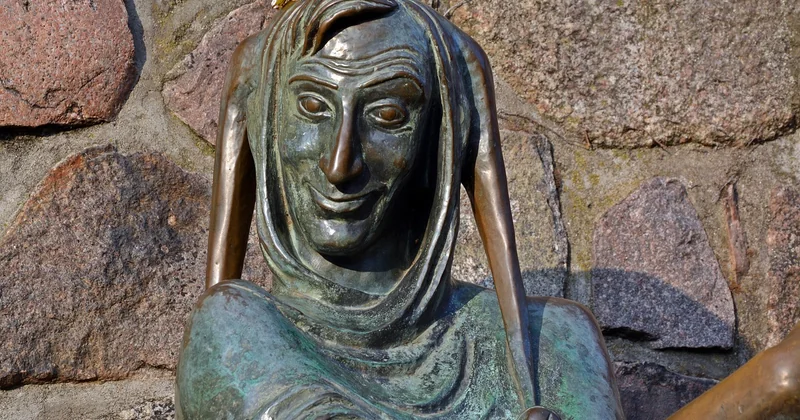
- The emperor's paper palace (fourteenth-century China): an empire in decline, and its ruler is building a working miniature clock.
- The general who lost a battle by staying too far back (Russia and the Ottoman frontier): the only people who understood the plan were the ones who fled.
- The flighty king (Scandinavia): a coronation without the groom, and a court that nearly rioted.
- The president and the invented speech (eighteenth-century America): the story is better than the record.
Notice the common thread? Power plus incompetence equals comedy that survives for centuries. It is the most durable form of humor we have.
What's the funniest thing that has ever happened?
There is no single correct answer, and anyone who claims otherwise has merely selected the anecdote they find most convenient. What I can tell you is that the funniest moments are always about a mismatch: a person who believes they understand a situation, entirely unaware that everyone around them sees the disaster unfolding.
The emperor with his miniature palaces is that story in miniature. A man thoroughly absorbed in a project while the world he governs quietly falls apart. Sound familiar? You have probably met him at work.
Do funny history jokes actually work?
Mostly yes, but the good ones are never just jokes. The best are compressed history lessons. A history joke works only if the listener already knows the context, and that means the punchline does double duty: it entertains and it teaches.
Try one on a friend and watch. If they laugh, they understand the historical situation. If they blink, you've found a gap to fill.
How to make a history joke actually land
- Name the person. "A king" is abstract. A named monarch and a named century is concrete.
- Leave one detail to the listener's imagination, and let them fill in the embarrassing part.
- Never explain the joke.
What are 10 significant moments in history?
Significance is subjective, but if you asked me to name ten moments that genuinely shifted trajectories, here is my list, with the absurdity admitted where it exists: the fall of a major dynasty in China, the signing of a foundational legal document, the outbreak of a continent-wide war, a decisive naval battle, a revolution, a scientific breakthrough, and the invention of the printing press. I'll leave the last two slots to your own judgment, because the list should be argued about, not simply accepted.
The point is that the most consequential moments in history are often accompanied by profoundly human comedy. The two don't cancel each other out. They occur together, because decisions made under pressure are made by people, and people are ridiculous.
So the next time a friend tells you a polished anecdote about a great historical figure, ask for the primary source. Sometimes you'll get a footnoted document. Sometimes you'll get a grin and a shrug. The difference tells you which one you're actually dealing with.