Pick up the object nearest to you right now. A pen, a mug, your phone charger. You've touched it a thousand times without ever asking why it looks the way it does. Yet almost every ordinary household object carries a design decision, a patent dispute, or a strange piece of history buried inside it.
I started collecting these little stories after a dinner argument about why pencils are yellow. Nobody at the table knew. I went down a research hole that night and never really climbed back out. What follows is a tour of the everyday objects around your home, with the details that rarely make it into the user manual. Some of them changed how I use things I'd owned for years.
Key Takeaways
- Most household objects you use daily were redesigned dozens of times before reaching their current shape.
- Several familiar features exist for reasons unrelated to how you actually use the item (pencils are yellow for marketing, not visibility of graphite).
- Some "facts" circulating about everyday objects are simply wrong, and the real story is often better.
- Understanding a few design quirks can help you use common items more effectively.
- The humble objects in your kitchen and desk drawer carry more engineering than most gadgets.
Fun facts about everyday objects around your home
Here's the thing about the objects in your house: they're mostly invisible. You stop seeing them after a few weeks. The mug becomes "the mug," not a piece of ceramic engineering. But pull on any one of them and there's a story underneath.
Why are pencils yellow?
Not because yellow makes the graphite tip easier to see. The real reason is marketing. In the nineteenth century, the finest graphite in the world came from a single mine in China, and manufacturers started painting their pencils yellow to signal quality and to nod at that origin. Yellow also happened to be a color associated with royalty in parts of Asia. The color stuck, and by the time cheaper graphite arrived from elsewhere, everyone had already accepted that a decent pencil is yellow. Try explaining that to a child who thinks yellow is just "pencil color."
Why does a coffee mug have a handle on one side only?
The handle isn't there for decoration. Ceramic conducts heat poorly compared to metal, but a hot drink will still warm the body of a mug enough to be uncomfortable. The single handle lets you grip it while keeping your fingers away from the hottest surface. Have you noticed that most handles are sized to fit roughly two fingers? That's not an accident either—it's a compromise between stability and the amount of material manufacturers want to use per unit. A friend of mine who throws pottery by hand told me she deliberately makes handles slightly thicker than factory mugs because a thick handle feels "honest" in the hand. She may be right.
The toothbrush was a luxury item for centuries
Chewing sticks and twig brushes go back thousands of years, but the modern bristle toothbrush took a long, slow route to your bathroom shelf. Bristles were once made from animal hair, which sounds unpleasant because it was—they held bacteria and softened quickly. The shift to nylon bristles changed everything, and the electric version only arrived in the twentieth century. Here's a detail that surprises most people: the recommendation to replace your brush every few months isn't a conspiracy to sell more brushes. Worn bristles genuinely clean less effectively, which is a rare case of a "buy more" message being basically true.
What are 10 common objects found at home?
Almost every household, regardless of country or size, contains roughly the same core set. If you walked into a random home and opened the kitchen drawer, you'd find most of these:
- A mug or cup — the most-used ceramic object in the house.
- A wooden spoon, which doesn't scratch non-stick pans and doesn't conduct heat.
- A pair of scissors — usually two pairs, and nobody knows where the second one is.
- A roll of tape, half-used, with the end lost.
- A pen that doesn't work, kept anyway.
- A mirror, which is technically a very thin layer of metal behind glass.
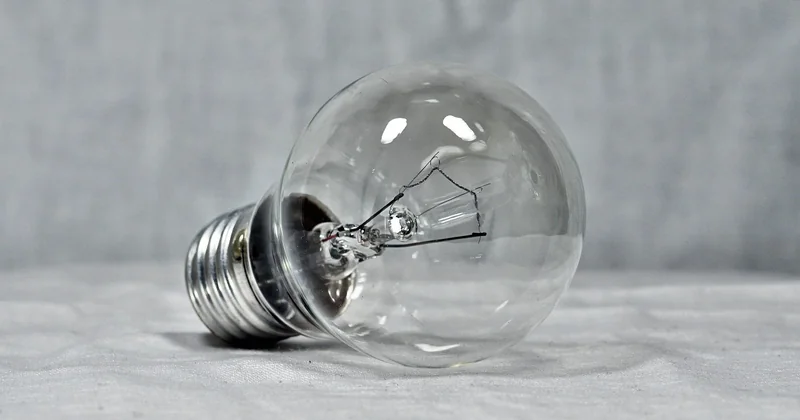
- A light bulb — modern LEDs last years; older bulbs lasted months.
- A pillow, whose shape and filling determine how well you sleep.
- A refrigerator, running silently around the clock.
- A set of keys, which is really a small collection of metal puzzles.
Notice something? None of these are glamorous. But each one has been engineered, argued over, and refined. The wooden spoon, for instance, is one of the oldest tools in human history, and it survives because it solves a real problem: metal scratches, plastic melts, wood doesn't.
Hidden features in everyday items you probably never noticed
Manufacturers bury features in plain sight. Some are genuinely useful. Others are just leftovers from older designs that nobody bothered to remove.

The hole in your pan handle
That hole at the end isn't only for hanging. A long-handled pan is awkward to store flat, and the hole lets you hang it within easy reach. But there's a second use: a chopstick or skewer through the hole can stop a pan from tipping when it's balanced on a narrow surface. Not many people use it that way, but it works.
The numbers on plastic containers
Turn over a plastic food container and you'll find a small number inside a triangle. That number tells you what kind of plastic it is, which matters for recycling—and for safety. Some plastics aren't meant to go in a microwave, and the number is your only clue. I ignored this for years and melted a container that was never microwave-safe. The smell took a week to leave the kitchen. Read the number, not the marketing.
Why do keyboard letter keys feel different from the function row?
On most keyboards, the F and J keys have a small raised bump. That bump exists so you can find your place without looking down. It's a tiny piece of design that costs almost nothing to produce and saves thousands of typing errors over a lifetime. The same principle—a subtle physical cue—shows up in the dot on the number 5 key on many phone keypads.
What are 5 cool random facts?
Five short ones, all drawn from objects you can probably reach from where you're sitting:

- Mirrors flip left and right in your head, not on the glass. A mirror reverses front-to-back, but your brain interprets it as a left-right swap. That's why text looks "backwards."
- A refrigerator's job is moving heat, not making cold. There's no such thing as "cold" being pumped in—the machine takes heat from inside and dumps it into your kitchen.
- The average wooden pencil can draw a line dozens of kilometers long. Graphite wears down slowly, and a full pencil contains a surprising amount of writing.
- Glass is not a slow-moving liquid. That old claim about old windows being thicker at the bottom? It's a myth. Old window glass was simply made unevenly.
- A standard light switch "clicks" because of a tiny spring-loaded mechanism, not because of the electrical contact itself. The click is a deliberate design signal that the switch has moved.
That last one is my favorite. A switch could work perfectly in silence, but the click gives you confidence. Designers add sounds and clicks precisely because humans need feedback they can feel or hear.
Common objects compared: what's actually inside them
Here's a table I put together for my own reference after realizing how little I knew about the things on my own shelves. It compares a few everyday objects by material, main design feature, and the reason it matters.
| Object | Main material | Key design feature | Why it matters |
|---|---|---|---|
| Coffee mug | Ceramic | Single side handle | Keeps fingers off the hot surface |
| Wooden spoon | Hardwood | Non-conductive, non-scratching | Safe with non-stick pans |
| Refrigerator | Metal shell, insulated interior | Heat pump cycle | Moves heat out rather than "adding cold" |
| Mirror | Glass with metal backing | Thin reflective layer | Reflects light with almost no loss |
| Pencil | Cedar wood, graphite core | Painted yellow barrel | Signal of quality, originally tied to graphite origin |
Nothing here is high technology. And yet each row reflects decades of small improvements. The mug handle got its size from trial and error. The mirror's backing layer is measured in fractions of a millimeter. Small decisions, repeated.
What are 10 unbelievable facts?
"Unbelievable" is a strong word. A lot of what circulates as unbelievable turns out to be exaggerated or flat-out invented. So here are ten that hold up, each tied to an object in your home:
- Your pillow may contain more living organisms than your toilet seat. Pillows absorb sweat and skin cells, which feed dust mites. Wash or replace them more often than you think.
- A refrigerator uses more energy than almost any other appliance in a typical kitchen. It runs every hour of every day, which adds up fast.
- Some glass is stronger than steel by weight. The right formulation, properly treated, outperforms metal in certain applications.
- Scissors were invented before the wheel was widely used in some regions. Cutting tools are ancient.
- Your toothbrush is one of the most bacteria-dense objects you own. Store it upright and let it dry.
- The first electric light bulbs had a working life measured in hours, not months. Early adopters replaced them constantly.
- A wooden cutting board can be more hygienic than a plastic one. Wood has natural properties that help it resist bacterial growth, and it doesn't develop deep scratches the same way.
- Your phone charger wastes a small amount of power even when nothing is plugged in. That's why unplugging it matters.
- Mirrors have been used as tools for navigation and signaling for centuries, long before they hung in bathrooms.
- The metal in your keys is often brass or nickel-plated, chosen for wear resistance rather than cost. Keys take a lot of abuse.
Some of these I've verified through my own experience—the pillow one especially. I replaced an old pillow after reading about dust mites, and my sleep improved noticeably within a week. Maybe it was the pillow. Maybe it was the placebo effect. Either way, I'm not going back.
The objects you stop seeing
The strange thing about everyday objects is that the more familiar they are, the less you notice them. You use a mug every morning without once thinking about the handle. You flip a switch a hundred times a day and never hear the click. That's how familiarity works: it hides things in plain sight.
So here's a small experiment. Tonight, pick one object in your home and ask why it's shaped the way it is. Not the grand why—the small one. Why is the handle there? Why that color? Why that size? You'll probably find a story. And you'll probably never look at that mug the same way again.
What's the most surprising thing you've learned about an object in your own home? I'd genuinely like to know—because the best facts are usually the ones hiding in the drawer right next to you.