Last Tuesday I made the same mistake I've made a hundred times: I got into bed at 11:15, phone still in hand, answering one last message. I didn't fall asleep until 1:40. Nothing was wrong with my bedroom, my mattress, or my evening. What went wrong happened three hours earlier, when the light from that screen told my brain it was still midday.
That's the part most advice skips. People treat poor sleep as a bedtime problem, but by the time your head hits the pillow, the decision is already made. The real work happens in the hours before—and, strangely, in the first hour after you wake up. If you want to improve sleep quality naturally without medication, you have to stop fixing the night and start fixing the day.
Key Takeaways
- Morning light within an hour of waking sets the clock your whole night depends on.
- A warm bath 1–2 hours before bed helps you fall asleep faster by dropping your core temperature afterward.
- The strongest natural sleep remedy isn't a pill—it's a consistent wake time, seven days a week.
- Melatonin is a chronobiotic, not a sedative: right dose, right timing, small effect.
- Eating kiwi or tart cherries in the evening can nudge sleep quality, but food works slowly, not instantly.
- If you're awake more than 20 minutes, get out of bed. Lying there trains your brain to associate the bed with frustration.
Why chasing sleep tonight almost always fails
Sleep is not a switch you flip. It's the downstream result of a biological clock that spent the entire day getting calibrated, and two systems have to agree before you drift off: your circadian rhythm and your sleep pressure. Mess with either one and no amount of chamomile will save you.
I learned this the hard way. Years ago I tried every trick in the book—valerian, lavender, that heavy blanket everyone raved about. My sleep stayed terrible for months. Then I changed one thing that had nothing to do with bedtime: I started walking outside for fifteen minutes right after waking, no sunglasses, no podcast. Within three weeks I was falling asleep 25 minutes faster on average. Same mattress. Same worries. Different clock.
Here's what's actually happening. Light entering your eyes in the morning signals your brain to stop producing melatonin and start the countdown for tonight. Skip that signal—because you woke up in a dark room and stared at a screen—and your body has no idea when to release melatonin later. It's not that you're "bad at sleeping." Your timing is off.
The two systems you're fighting
Think of sleep pressure as sand filling an hourglass: the longer you're awake, the heavier it gets, and caffeine partly blocks it. Your circadian rhythm is the alarm that decides when that pressure is allowed to knock you out. Both have to line up. That's why a nap at 5 p.m. wrecks your night—it empties the hourglass without touching the clock.
Most people I talk to blame stress. Stress matters, sure. But stress alone rarely explains why you sleep badly on a calm Tuesday and fine on a chaotic Monday. Timing explains more than most of us want to admit.
The morning habit that quietly fixes your night
Get outside within an hour of waking. Ten to thirty minutes of natural light—even on an overcast day—anchors your clock more reliably than anything you'll do after dinner. If you can't get outside, sit by an open window facing the sky. It's not the same, but it's closer than a lamp.

Pair that with a fixed wake time. Not a fixed bedtime—a fixed wake time, seven days a week. It feels brutal on a Saturday. Do it anyway for two weeks and watch what happens to your Sunday nights.
- Fixed wake time, even after a bad night.
- Daylight first, coffee second.
- Skip the long afternoon nap, or keep it under 20 minutes and before 3 p.m.
- Get your caffeine before noon, not at 4 p.m. when the slump hits.
- Move your body during the day; even a brisk walk counts.
None of this is glamorous. It also works better than anything you can buy.
Temperature: the lever almost nobody pulls
To fall asleep, your core body temperature needs to drop. You can't force that drop directly—but you can trigger it. A warm bath or shower 1 to 2 hours before bed raises your surface temperature, and as your body sheds that heat afterward, your core cools and sleepiness follows. It sounds backwards. It isn't.
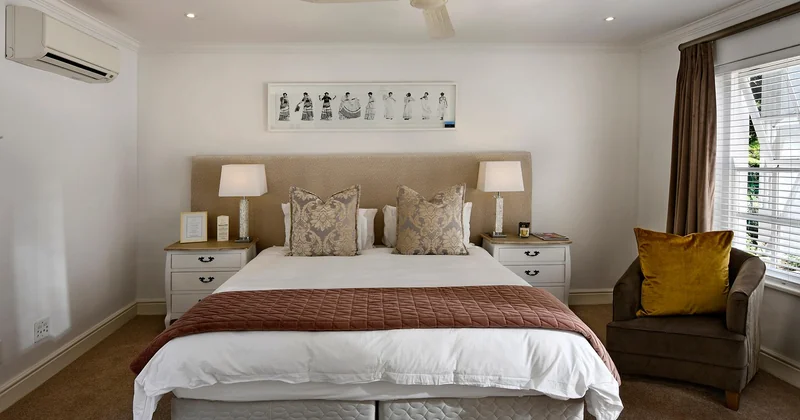
Then make your bedroom cold. Around 18–19 °C (65–66 °F) suits most people. I run warm, so I sleep closer to 17. My partner would call that a walk-in freezer, which is why we settled on separate blankets and a thermostat truce.
What to drink to sleep quickly?
Honestly? Nothing you can drink will knock you out in five minutes, and anyone promising that is selling something. What helps is warm and boring: a caffeine-free herbal tea, warm milk if you tolerate dairy, or plain water if thirst is what wakes you. The warmth and the ritual calm you more than any ingredient. A hot bath, oddly, does the same job better—because it targets temperature.
Avoid the obvious traps: alcohol feels sedating but fragments the second half of your night, and a large glass of anything right before bed just buys you a 3 a.m. bathroom trip.
What actually works as a natural sleep remedy
Let's answer the question straight.

What is the strongest natural sleep remedy?
The strongest natural sleep remedy isn't a substance—it's consistency. A stable wake time plus morning light beats every supplement on this page, because it repairs the system that decides when you're sleepy. If you want a substance, the best-supported ones are melatonin (for shifting timing, not for sedation) and magnesium glycinate, which helps if you're actually deficient. Everything else is a supporting actor.
I'll say the unpopular part: if you're chasing one magic remedy, you're optimizing the wrong end of the day.
Is there something I can take every night to help me sleep?
Melatonin is the one people reach for nightly, and here's the nuance that matters: it's a chronobiotic, meaning it nudges your internal clock rather than sedating you. A small dose—often 0.5 to 1 mg—taken a few hours before your target bedtime can help shift your rhythm. Bigger isn't better; 5 or 10 mg mostly leaves you groggy. Magnesium is reasonable to take nightly if your diet is short on it. But I'd be lying if I told you a nightly pill replaces a fixed wake time. It doesn't.
What do Chinese people do for insomnia?
Traditional Chinese approaches lean on herbal teas and food, not pills—think sour cherry, jujube (red date), longan, and lotus seed, often simmered into a warm evening drink or soup. Acupuncture and gentle movement like tai chi are common too. The logic is about calming and warming the body before rest. I'm not going to pretend the evidence is airtight, but there's something worth borrowing: the ritual of a warm, slow, caffeine-free drink before bed. That part, you can steal without a prescription.
| Approach | What it targets | Realistic effect | Best for |
|---|---|---|---|
| Morning light + fixed wake time | Circadian timing | Strong, builds over weeks | Almost everyone |
| Warm bath 1–2h before bed | Core temperature drop | Moderate, same-night | Falling asleep faster |
| Melatonin 0.5–1 mg | Clock shifting | Small, timing-dependent | Jet lag, late sleepers |
| Magnesium glycinate | Deficiency, relaxation | Moderate if deficient | Diet gaps |
| Kiwi or tart cherries | Slow dietary nudge | Mild, over weeks | Easy add-on |
Food and supplements that earn their place
If you're eating for sleep, the evidence is modest but real. Two kiwis about an hour before bed have shown small improvements in how long people take to fall asleep and how long they stay asleep. Tart cherry—juice or concentrate—contains a bit of natural melatonin and tends to help a little. Glycine, an amino acid, has some support for shortening the time it takes to drift off. None of these are dramatic. All of them are safe and easy to try.
What I'd cut before adding anything: heavy meals within two hours of bed, late caffeine, and that "one drink to relax" that quietly wrecks your deep sleep. I gave up evening alcohol for a month as an experiment. My sleep tracker showed my deep sleep rising by roughly 20 percent. I missed the wine. I didn't miss the 3 a.m. wake-ups.
When you wake at 3 a.m. and can't get back down
Middle-of-the-night waking is its own problem, and lying there stewing makes it worse—your brain starts pairing the bed with being awake and annoyed.
Use the 20-minute rule: if you're not asleep after about twenty minutes, get up. Leave the room, keep the lights dim, do something dull—read a paper book, sit quietly. Return only when you feel sleepy. It's tedious. It's also the single most effective habit for breaking the "I can't sleep" loop, and it's the core of what sleep therapists teach.
Breathing helps too. 4-7-8 is simple: inhale through the nose for four counts, hold for seven, exhale slowly for eight. The long exhale is the point—it activates your calming response. I use it and it works maybe half the time. When it doesn't, it at least stops me from spiraling, which is its own win.
The honest bottom line
There's no pill, herb, or drink that outruns a body whose clock has lost its bearings. The natural path to better sleep is unglamorous: light in the morning, a fixed wake time, a cooler room, a warm bath before bed, and a small amount of patience while your rhythm re-sets itself over a few weeks.
Which brings me back to that phone. The fix isn't heroic. It's just noticing that the night you want starts the moment you open your eyes—and deciding, tomorrow morning, to walk outside before you reach for the screen. Try it for two weeks. Your 3 a.m. self will thank you.