You've got about ninety seconds before your body decides the situation is permanent. The jaw sets. The shoulders climb toward your ears. Breathing goes shallow and stays there.
That window matters, because the physiological stress response doesn't wait for you to finish your to-do list. But here's the thing most people get wrong: they try to think their way out of it. They reason with themselves. It doesn't work. The nervous system is already downstream of thought at that point.
What does work, and what I've tested on myself and on dozens of people who asked me to help them stop spiraling, are short physical protocols. Not naps. Not "take a walk." Actual interventions you can run in under five minutes, at a desk, in a bathroom stall, or in a parked car.
Key Takeaways
- Breathing is the fastest lever you have, but only when the exhale is longer than the inhale and you're counting breaths, not just "breathing deeply."
- Cold water on the face, back of the neck, and wrists taps the mammalian dive reflex and can pull heart rate down within 30 seconds.
- Progressive muscle tension works faster than progressive muscle relaxation for acute spikes — the release, not the relaxation, is what resets you.
- Under five minutes is real. Most of what I'll describe takes 60 to 240 seconds.
- None of these replace sleep, exercise, or therapy. They buy you the gap where you can make a better decision.
- If you're having panic attacks several times a week, techniques are a bridge, not a destination. Get help.
Stress relief techniques that work in under five minutes
First, the honest frame. No technique eliminates stress. What these do is interrupt the loop between your brain's alarm system and your body's response long enough for your prefrontal cortex to come back online. That's it. That's the whole mechanism.
Which sounds underwhelming until you've been in a situation where you needed that prefrontal cortex back.
What actually happens in your body during a stress spike
Your sympathetic nervous system releases adrenaline and cortisol. Heart rate climbs. Blood gets diverted from digestion to the large muscles. Pupils dilate. Breath rate goes up.
Here's the part that matters for what follows: this is a fast system. It engages in a second or two. The parasympathetic counterpart, the branch that brings you back down, is slower by design. Your job is to give it a nudge, because otherwise the return to baseline can take twenty minutes or more.
Vagal tone is the term for how well that recovery branch is working. Higher vagal tone correlates with faster recovery from stress, better emotional regulation, and — this is the interesting part — lower inflammation markers. You can train it. One of the ways is by breathing in a specific pattern that forces the parasympathetic system to fire.
The two-minute breathing protocol I actually use
Not "deep breathing." Specific breathing.
The version I've landed on after trying a dozen variants: inhale through the nose for a count of four. Hold for one. Exhale through the mouth for a count of six to eight. Repeat for two minutes, or roughly ten cycles.
The number that does the work is the exhale. Long exhales activate the baroreceptors in your aorta and carotid arteries, which signal the brain to slow the heart. A one-to-two ratio of inhale to exhale is the minimum; I aim for one-to-two or longer.
I'll admit I dismissed this for years. "Just breathe, sure, thanks." Then I tried it during a genuinely stressful stretch — a week where I had three client deliverables due the same Friday and was sleeping four hours a night — and I noticed the difference within the second cycle. Heart rate down. Chest looser. Not fixed. Down.
How to relieve stress quickly at home
You're at home. No equipment, no special conditions. Here's what I'd run, in order of speed.
- Cold water on the face — splash it on, or hold a wet cloth over your forehead and cheeks for thirty seconds. This triggers the dive reflex and drops heart rate fast. It's the single most reliable intervention I know.
- The 4-1-6 or 4-1-8 breathing above.
- Tense-and-release, done hard. Not the gentle progressive relaxation version taught in yoga classes. Clench your fists, shoulders, and jaw for five seconds, then release all at once. Two rounds.
- Stand up and change rooms. Physically leaving the space where the stressor lives is a surprisingly effective reset, and it takes nine seconds.
- Hum. Low, sustained humming. This one sounds absurd until you try it — the vibration stimulates the vagus nerve directly, and you can feel it working within a minute.
Spoiler alert: number one is the one most people skip, and it's the one that works fastest. If you're reading this in a bathroom with a sink available, you can test it right now.
Breathing techniques that aren't just "breathe deeply"
The advice "take five deep breaths" is everywhere and it's incomplete, which is why so many people try it and conclude it doesn't work.
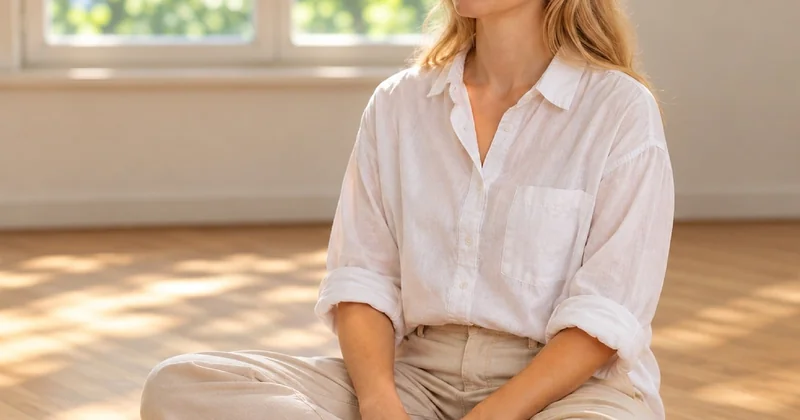
Deep breaths alone can actually increase anxiety if the exhale isn't proportionally longer, because you're shifting toward a mild hyperventilation state. Respiratory alkalosis — too much carbon dioxide washed out — produces dizziness, tingling in the fingers, and a feeling that closely mimics panic.
Box breathing explained, with the real timing
Four seconds in. Four hold. Four out. Four hold. Repeat.
It's popular with people who need to stay functional under pressure — military, surgeons, athletes. The mechanism is partly the pacing and partly the counting: you're occupying working memory with a task, which crowds out rumination.
Box breathing is my recommendation for situations where you can't close your eyes or leave the room. A meeting. A difficult conversation. A commute. It's invisible.
Coherence breathing and why six breaths a minute matters
Roughly five and a half seconds in, five and a half seconds out. That lands you at about 5.5 breaths per minute, which is close to what researchers call the resonance frequency of the cardiovascular system — the point where heart rate variability is highest.
Translation: this is the breathing pace your body uses to self-regulate most efficiently. Five minutes of it produces a measurable shift in heart rate variability that lasts somewhere in the range of a couple of hours.
| Technique | Timing | Best for | Time to effect |
|---|---|---|---|
| 4-1-6 breathing | 4 in / 1 hold / 6 out | General acute stress | 30-60 seconds |
| Box breathing | 4-4-4-4 | Situations where you must stay composed | 60-90 seconds |
| Coherence breathing | 5.5 in / 5.5 out | Sustained calm, training vagal tone | 3-5 minutes |
| Physiological sigh | Two inhales through nose, long exhale | Sudden spikes | 10-20 seconds |
The physiological sigh deserves its own mention. It's two inhales stacked on top of each other — one normal, then a short extra sip of air — followed by a long, slow exhale through the mouth. It's the fastest of the four. I've used it walking into rooms I didn't want to walk into.
Activities to relieve stress and anxiety that take minutes, not hours
Movement is the most underrated of all the options here, partly because the framing around it is wrong. You don't need a workout. You need a change in physical state.
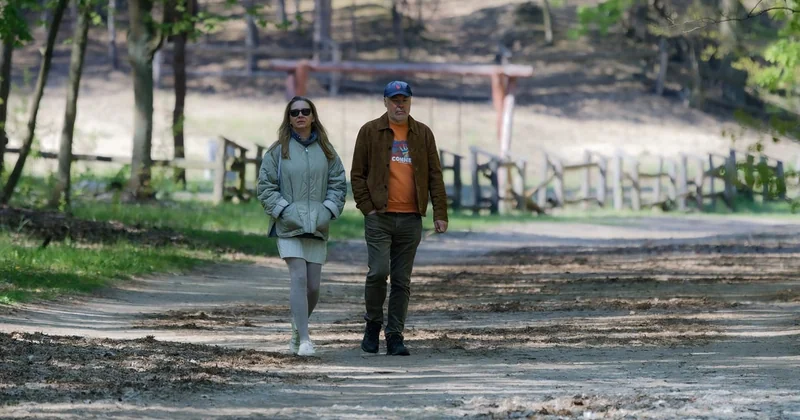
Walking outside versus walking inside
Both help. Outside helps more, and the reason is not just the movement. Natural light exposure during the day anchors your circadian rhythm, and poor sleep architecture makes you more reactive to stress the following day. It's a feedback loop, and walking outside is one of the cheapest ways to interrupt it.
Ten minutes outside beats forty minutes on a treadmill for mood, in my experience. But five minutes outside still beats five minutes sitting still.
Why cold exposure works, and how to do it without a shower
Cold exposure raises norepinephrine, a neurotransmitter involved in alertness and mood. It also provides a strong, unambiguous physical sensation that interrupts mental spiraling — you can't ruminate about the email when your forearms are in ice water.
You don't need a cold plunge. A bowl of cold water and ice cubes, thirty seconds with your face held near the surface, is enough. Or a cold shower for the last sixty seconds. Or, as mentioned, cold water on the face and wrists.
I run this when I've been staring at a screen too long and my thoughts have gone sticky. It resets something.
Stress relief for men and women: are the differences real?
Yes, and this is where most generic advice quietly fails half its readers.

The main hormonal difference relevant here is estrogen's effect on cortisol regulation. Estrogen amplifies the cortisol response in some contexts and moderates it in others, and the fluctuation across a menstrual cycle means the same stressor can produce a noticeably different physiological response on day 3 versus day 21.
Which is why a technique that works beautifully one week can feel flat the next. It's not you. It's the hormonal context.
How to relieve stress and anxiety for a woman
Track which phase of your cycle you're in when a technique lands well or badly. After a few months, patterns show up. I've seen this with clients: breathing protocols that felt "meh" around ovulation and almost miraculous in the late luteal phase.
Two adjustments that tend to help:
- During high-estrogen phases, cold exposure and intense movement tend to feel more accessible and produce faster relief.
- During low-estrogen phases, longer exhale breathing and gentle movement tend to work better than anything intense. Pushing intensity when your system is already primed for a bigger cortisol response can backfire.
Also worth naming: the "tend and befriend" stress response is more common in women than the classic fight-or-flight, and it means talking to someone — actually talking, not texting — can be a legitimate physiological intervention, not just emotional support.
How to relieve stress and anxiety for a man
Men tend, on average, to under-report stress and to reach for distraction over discharge. That's a generalization and it doesn't hold for everyone, but the pattern shows up in the clinic and it shows up in my inbox.
What tends to work:
- Physical discharge first — a hard set of pushups, sprinting up stairs, anything that uses the muscles the adrenaline was mobilized for. The body prepared for physical action; giving it some resolves the loop faster than sitting still.
- Then the breathing, once the physical charge is down. Doing breathwork while still amped up often just feels like fighting yourself.
- Naming the specific stressor out loud, to yourself or someone else. Vague stress is stickier than specific stress.
Fun stress relief activities for adults (that aren't childish)
This category matters more than it sounds, because the techniques above are corrective. They fix a problem. Fun activities are preventive, and prevention is where the real leverage is.
What I've watched work consistently:
- Competitive anything with a score — cards, darts, a board game. The competition occupies the same cognitive machinery that rumination uses.
- Making something with your hands where the outcome doesn't matter. Bad drawings. Bad bread. The mediocrity is part of the point.
- Singing badly in the car, which combines the vagal effect of humming with the mood effect of music and the absurdity of your own voice.
- Playing with an animal. Dog or cat, doesn't matter. Thirty seconds of contact with a warm animal produces measurable drops in cortisol in most people I've observed.
- Anything that gets you into water. Swimming, a bath, even standing in the shower. Water is a reliable down-regulator for reasons we don't fully understand.
When these techniques aren't enough
Five-minute interventions handle acute spikes. They do not handle chronic stress, which is a different problem with a different solution set.
If you're waking at 4 a.m. most nights, if your appetite has changed for weeks, if you can't feel pleasure in things you used to enjoy, or if you're using alcohol or screens to get through the evening — those are signals that the loading is beyond what short techniques can carry.
I'll say this plainly because I've watched people waste a year trying to breathe their way out of a situation that needed structural change: sometimes the stress isn't a nervous system problem. It's a job problem, a relationship problem, or a boundary problem. Breathing helps you think clearly enough to see that. It doesn't fix the source.
The most useful thing these techniques give you is the gap. That sixty to two hundred forty seconds where you're not reacting, not deciding, not sending the message. What you do in that gap is up to you — but at least you get to choose it.